Long-form on designing sovereign AI systems, the one PM skill that doesn't go obsolete, product management in the AI era, the eight hours a day teenagers are losing to screens, the measurement infrastructure we owe our children, what trustworthy AI actually means in practice — and a quieter piece on why working with AI is making me want to read more.
Sovereign AI went from niche to procurement default in 18 months. The six-layer stack, the data/AI architecture convergence, the hardware reality of the world outside hyperscale, and the seven consequences of the kill-switch realization. Cross-posted from AI Impact Foundation.
Understanding the market — the only PM skill that has out-lived every tool, framework, and technology wave. What it means, how AI changes it, and a live demo: analyzing the enterprise AI use case market with a 2×2 you can build in a day.
A strange thing is happening: the more I work with AI, the more I want to read. Atticus Finch on the porch. Roy's monsoons. The boys in the boat. A personal essay on friction, restlessness, and the renewed hunger for the slow.
The job hasn't changed. The leverage has. A field guide for product managers navigating a world where the model is the product — and where judgment, not velocity, is still the discipline that matters.
Teens spend eight-plus hours a day on entertainment screens, thirty-nine minutes with friends in person, and nine minutes reading. The story is not what they are doing. It is what they are not — and what we owe them as the people building the products that took those hours.
We measure AI by benchmarks, parameters, and revenue. We don't measure what it's doing to the generation growing up inside of it. Introducing a framework for the measurement infrastructure that generation deserves.
"Trustworthy" is the most overloaded word in AI right now. Here is the operational definition — seven properties that, taken together, give you an AI system that earns trust rather than claiming it.
A selection of pieces from the last several years — on composite AI, transactional AI, the practice of product management, and the open mind behind shared trust.
Academic research, industry essays, and the occasional long conversation about enterprise AI.
Books I am in right now, and a longer shelf of ones I keep returning to.
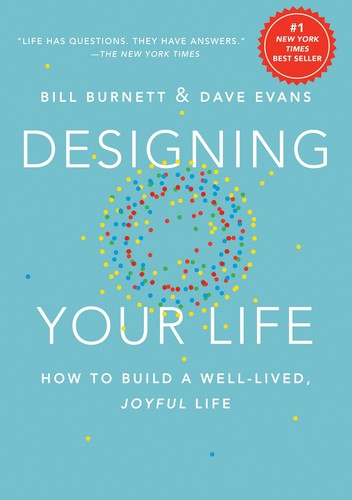
A Stanford d.school approach to life with the same rigor we use for products. The premise that lands hardest: prototype your path, do not plan it. I am reading this with my daughter and finding it has just as much to teach me.
I keep this on my desk. A reminder, on the loud weeks, that the obstacle is the way and that strategy without temperament is noise. Two pages a morning, and the day starts differently.
Roy at her most personal — the relationship that shaped the writer who shaped a generation of readers. I have read everything she has written; this one is different, and I am taking it slowly.
Returning to Atticus in a different decade of my own life. The book reads differently when you have led teams and raised a child. The quiet moral courage lands harder than it did the first time.
A quiet, unforgettable account of friendship under regimes that try to erase it.
The book that made me believe sentences could be architecture.
A reminder that learning, sometimes, is a kind of survival.
The fifty-thousand-foot view that helps me think in centuries, not quarters.
Slow-burn India of the 1950s, told with the patience of a great novel.
Useful for product leaders — when to trust the gut decision, and when not to.
Atmosphere as character. Read it on a long flight; finished before landing.
Required reading for any parent or leader thinking about phones, children, and what we have done to attention.
Delhi through a foreigner's curious eyes — a love letter to a city I keep returning to.
On the small and large costs of carrying two cultures inside one name.
Short stories I re-read whenever I want to remember what restraint sounds like.
An ode to teamwork — the kind that takes years and asks more of you than you knew you had.