I have been sitting with a question for a few weeks now, and it does not have the shape of a strategy memo.
As a person, as a professional — what is my authentic self, and how do I begin to create something that matters?
I want to think about this on the page because I notice that most of the people I respect, somewhere in their forties, ask a version of the same question quietly. They use different words. They ask it on a Sunday afternoon walk. They ask it on the third glass of wine. They ask it when one of the children says something that lands too hard. The frame is roughly the same: am I who I actually am, or am I the version of me the world spent thirty years sanding down?
The answer I've been arriving at, slowly, is that the question is real but the framing has a small error in it. I want to write through that.
The kid in the tree
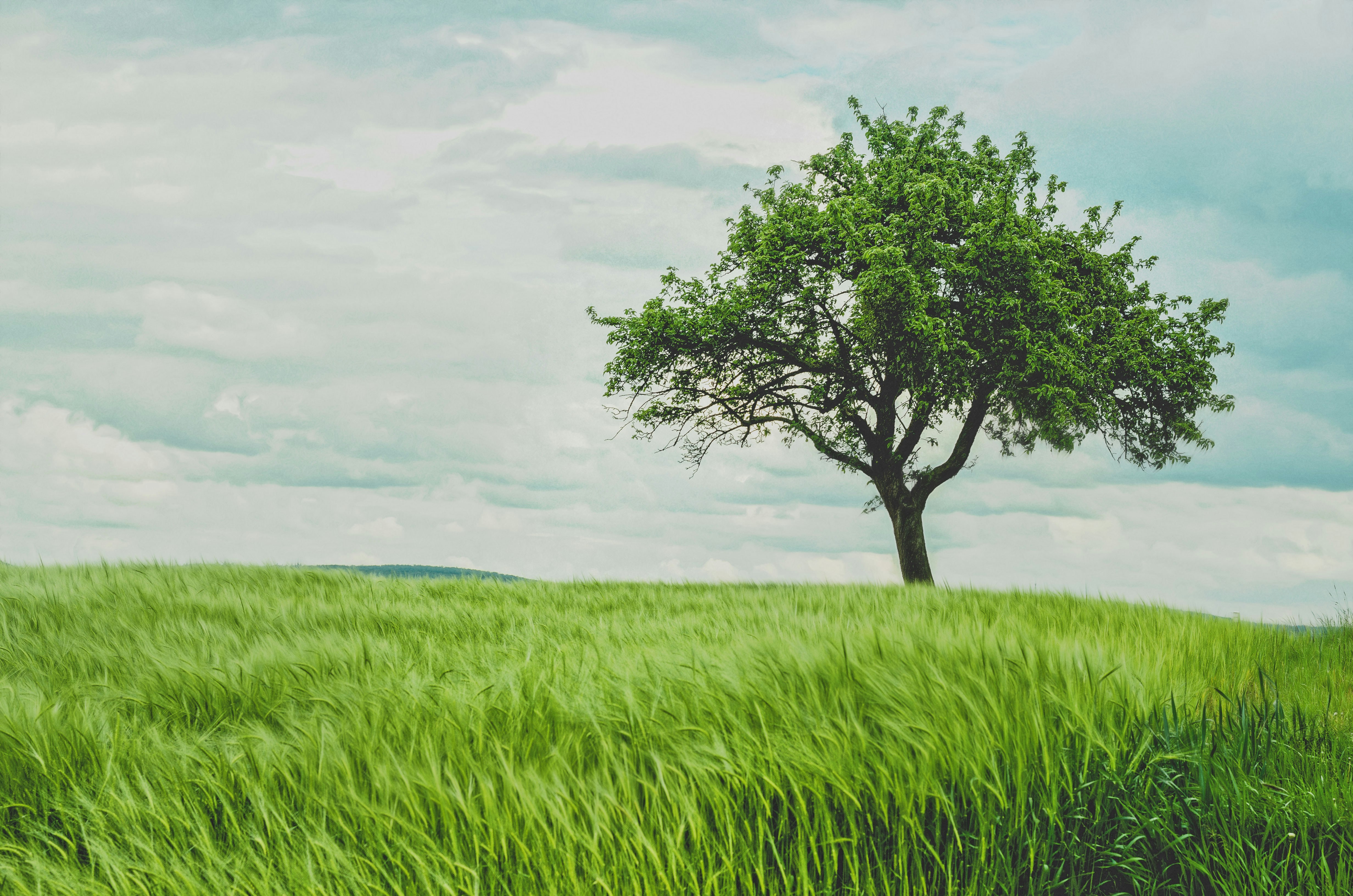
There is a tree I used to climb to be alone with a book. I do not remember its species, only its branches, and the angle of the third one from the bottom, which was where I went when I wanted to disappear. I climbed for the height and for the privacy. The adults could not reach me up there. The book could.
I was, by most accounts, a wild child. I ran through mango orchards. I caught birds. I rode water buffaloes home in the slow heat of late afternoons. I watched the dust rise in the streaming light through a window, and I watched the shadows change as the sun moved across a verandah, and I thought, even then, that watching was a thing one could properly spend a life on. The beauty of the present moment — a leaf falling, the smell of rain before it came, the slowness of a hot afternoon — felt to me like the truest thing in the world. I do not think I have changed my mind on that.
I read anything and everything I could put my hands on. ee cummings, who taught me that you could break a line however the feeling demanded. The other famous ones — the poets and novelists and essayists my parents kept on high shelves, the cheap paperbacks borrowed from a library that never quite got them back. I wrote my own poems, in pencil, in a notebook I would not let anyone else read. I wrote about the leaf and the light and the buffaloes and the afternoons. None of it was good. All of it was practice in paying attention. I read past the time the lamps were turned off.
The grown-ups around me oscillated between charmed and worried — charmed when I behaved like the daughter they wanted, worried when I refused. I, oblivious, was the most certain I would ever be in my life about what I wanted to do, which was: read more, climb higher, write the thing down, watch the light a little longer, and not be told who to be.
Two books, of all of them, came in then and never quite left. The Catcher in the Rye, which arrived at the age it had to arrive, and To Kill a Mockingbird, which I have re-read in every decade since. I have read them as a teenager. As a young professional. As a new mother. As a tired one. As a founder. Each reading is a different book. The lines that move me change. What does not change is the recognition.
It took me a long time to figure out what those two books were doing. I used to say they "changed something in me." I do not say that anymore. They confirmed something that was already there, and they gave me language to defend it later. Catcher is a book about refusing to be a phony. Mockingbird is a book about a man sitting on a porch doing the unpopular thing because it is the correct thing. Both are about people who pay a price for not pretending.
If those are the books that landed in me at eleven, the books that I keep returning to at every age — I think the books are telling me something about what I was always going to be willing to pay for.
The voices that tried to sand it down
The world had other ideas. The world almost always does. I was told, in many small and large ways, that life had to be played safely. There was a way you were supposed to be. There were things you were supposed to do. There were professions that were respectable and professions that were not. There were ways of being a woman and ways of being a mother and ways of being an Indian and ways of being a professional, and all of them were boxes you were supposed to fit into without making it weird.
I am not unusual in this. Almost everyone gets the same memo. The memo is sometimes loving. The memo is sometimes spoken by people who genuinely think they are saving you from disappointment. The memo is occasionally enforced with weight a child cannot carry. It is also, almost always, wrong — not because being safe is wrong, but because the people writing the memo are answering a question the recipient did not ask.
The memo arrives. The kid in the tree does not. The two have been quietly arguing with each other ever since.
What I think happens to most of us is this: the memo gets internalised. We accept the voice as our own. We start to make choices on its behalf, and we forget that we ever had a choice that wasn't the memo's. The wildness gets folded inward. The reading gets called impractical. The tree gets cut down to make room for a sensible lawn.
And then, somewhere in our forties or fifties, we wake up on a Sunday morning and notice that the version of us we became is fluent, professional, and slightly hollow. The voice that comes out of our mouths in meetings is competent. It is also not exactly ours. We look at our calendar and we cannot quite find the kid in the tree on it.
The through-line you don't have to find
Here is the thing I have been arriving at, in pieces, over the last few months. The authentic self is not somewhere I have to look for. It has been the through-line all along. The kid in the tree, the woman reading Salinger at twenty, the new mother holding a baby and a book at the same time, the founder of an organisation she built because the version of education on offer did not fit what she believed about children — that is not four different people. That is the same person at four points of pressure, choosing the same way each time.
I raise three children on my own terms now, with an education I picked because the standard one did not look like a place where curious children get to stay curious. People around me told me this was risky. The kid in the tree thought it was the only choice that made any sense.
I built AIIF because there is no version of practitioner-led, ethically-honest AI education in the world I wanted my own children to inherit unless someone built it. People around me told me to wait until the market was bigger. The kid in the tree did not see the point of waiting.
I write what I write — including this — because Atticus and Holden both, in their own way, paid a price for not pretending, and reading them gave me permission as a child to do the same, and I have been doing some version of that ever since. People around me sometimes wish I would soften. The kid in the tree does not know how.
None of this is performance. None of it is brand. It is the same person, all the way down.
I do not write that to be confident. I write it because I think a lot of people quietly hold the belief that their real self is some buried, hidden thing they have to dig up — and I think for most of them, including me, that framing has it backwards. The real self has been making the unpopular calls all along. The work isn't to find it. The work is to notice that the through-line is already there, look at it honestly, and stop apologising for it.
The professional and the personal are the same person
The question I asked at the top — as a person, as a professional, what is my authentic self? — has a small error in it. The error is the comma.
The people I have watched build things that mattered — really mattered, not just made money — collapsed that distinction early. The professional self that is a separate thing from the personal self is the one that drifts into work that does not quite feel like yours. The professional self that is the personal self, with skills, is the one that does work the world ends up remembering.
I do not always honour this. I have whole quarters where the professional Meeta runs the calendar and the personal Meeta has to wait until the children are asleep. But I have learned to notice when the gap between the two is widening, because that is the moment the work gets drier and the energy gets harder to find. The fix is always the same: bring the kid in the tree back into the boardroom. She has nothing impressive to say. She has the only thing worth saying.
"Begin" is doing all the work
The second half of the question I asked is the harder half. How do I begin to create something that matters? When I look at that sentence honestly, the word doing all the work is begin. I did not ask "what should I build." I asked how to start.
That word implies, I think, that I already suspect the answer is not a five-year plan. It is a small first move, in the direction the through-line points, and then another one, and another. The five-year plan is a story we tell to give the small moves cover. The small moves are the actual thing.
The instinct that has served me best is this: notice what your present life is already saying about what matters to you, before you decide it from scratch. The author of the choices you have already made — the children, the education, the foundation, the writing, the refusal of certain rooms, the embrace of others — is probably the same author of the next ones. You have more data than you think. The future is not as blank as it looks at 5am.
For me, the next thing is not yet sharp. But the direction is. Some combination of teaching, building, and writing. Some version of what AIIF already is, taken further, in places I have not been. Work where my children, when they are adults, can read what I made and recognise their mother in it. The eleven-year-old in the tree would approve of that as a north star, even if she would not have been able to articulate it.
The eleven-year-old in the tree
I will end with the question I keep coming back to on the hard days. I offer it because I think it is the most useful question I have.
What does the eleven-year-old in the tree think of the version of me she became?
Not the version that performs well in a meeting. The version she would recognise. The version that still climbs, still reads, still refuses to be a phony, still pays the small daily price for not pretending. If that kid would put down the book, look at me, and nod — that is enough information to keep going. If she would furrow her brow and ask what happened, that is information too. I take both seriously.
On most days she nods. On some days she does not. On the days she does not, I make a small adjustment — a meeting I do not need to take, a sentence I refuse to soften, a chapter I read instead of an email I would have rather not sent. The adjustments are not large. They do not have to be. They just have to point her direction.
I think this is what authenticity actually is, in practice. Not a grand reinvention. A quiet, steady refusal to drift away from the kid in the tree.
I am not lost. I am at a hinge. The work is not to find myself. The work is to spend the self I have been all along on something worthy of it.
That is what I have been sitting with. That is what I will keep sitting with. And on the days the sitting itself feels like the work, I am going to remember that the kid in the tree was, in fact, doing the work the entire time. She was reading. She was watching the light. She was writing it down. She was paying attention. She was learning who she would refuse to be.
The rest of my life is whatever I now choose to spend her on.
I am writing this in part for my own children — in case it is useful to them, one day, when the world starts handing them the memo.
Climb the tree. Read the book. Write the poem. Watch the light change on the verandah and do not call it wasted time. Notice what you are willing to pay for. Be the kid in the tree as long as you can — and when you can't, find a way to bring her with you into whatever room you find yourself in next.